
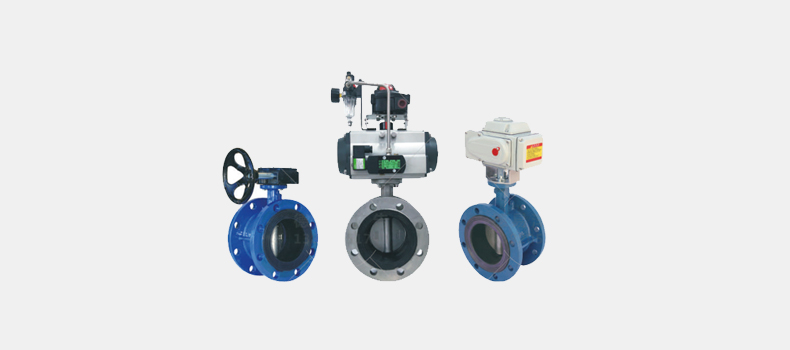
Ventilation and air conditioning valves, gate valves, stop valves, ball valves, and butterfly valves: Their structural features and applications
1. Gate valve
The gate valve controls the opening and closing of the pipeline by means of a vertically movable gate plate. When the gate plate rises, the fluid flows through the passage between the gate plate and the valve seat; when the gate plate descends and closely contacts the valve seat, the passage is closed and prevents the fluid from passing through.
Characteristics of gate valves:
When fully open, the flow channel is completely unobstructed, with extremely low resistance, making it suitable for large-scale fluid transportation.
2) The opening and closing process is slow and is not suitable for regulating the flow rate. Otherwise, the gate plate is prone to be eroded and damaged.
3) The sealing performance is good, but when it is in a partially open state for a long time, the sealing surfaces are prone to wear.
Gate valves are mainly used in the main supply/return water trunk lines of water heating and air conditioning systems, or in large-diameter pipelines where complete on-off functionality and low flow resistance are required, such as the inlet and outlet pipelines of water chillers and boilers.
2. Check Valve
The stop valve operates by the valve stem moving the valve disc up and down along the axis of the valve seat, thereby changing the gap between the valve disc and the valve seat to control the flow rate. Usually, the fluid needs to flow from below the valve seat, pass through the gap of the valve disc, and then flow out from above. The flow path takes the shape of a "Z".
Characteristics of the stop valve:
The flow channel is tortuous, resulting in a relatively high flow resistance. However, it has high adjustment accuracy and can precisely control the flow rate and pressure.
2) The opening and closing speed is faster than that of a gate valve. During the closing process, the sealing surface is subjected to uniform force, ensuring reliable sealing performance.
3) Not suitable for fluids with high viscosity or containing impurities, as it may cause the valve disc to get clogged or worn out.
Stop valves are mostly used in branch pipelines where the flow rate or pressure needs to be regulated. Examples include the inlet and outlet of end devices such as air conditioners (fan coil units, air conditioning boxes), the supply pipes of radiator units, as well as the front-side pipelines of pressure gauges and thermometers.
3. Ball valve
The ball valve uses a spherical body with a through-hole in the middle as the control element. The valve is opened or closed by rotating the ball (usually by 90°). When the through-hole of the ball is in alignment with the pipe opening diameter, it is fully open; when it is vertical, it is fully closed.
Characteristics of ball valves:
The flow channel is simple, resulting in low resistance. It operates quickly and can be completed by rotating 90°.
2) The structure is compact, resulting in a small size, light weight, easy maintenance and excellent sealing performance.
3) The regulating performance is poor and it is only suitable for rough adjustment. It is not suitable for long-term use in throttling conditions.
Ball valves are widely used in the branch pipelines of water heating and air conditioning systems, as well as in the connection pipes of terminal equipment, such as the inlet valves of fan coil units, the branch valves of manifold distributors, and in pipelines that require quick opening and closing, such as the control valves before the make-up water valves and exhaust valves.
4. Butterfly Valve
The butterfly valve controls the flow of fluid by rotating a butterfly plate (disc-shaped) around a vertical axis. When the butterfly plate is rotated to be parallel to the flow channel, it is fully open; when it is rotated to be perpendicular to the flow channel, it is fully closed.
The characteristics of the butterfly valve:
The structure is very compact, resulting in a small size and light weight. It has low requirements for installation space and is particularly suitable for large-diameter pipelines.
2) It opens and closes quickly, has moderate flow resistance, and can be used for flow regulation within a certain range, but its regulation accuracy is lower than that of a stop valve.
3) The sealing performance is significantly influenced by the fit between the butterfly plate and the valve seat. Under high-pressure conditions, the sealing reliability is slightly inferior to that of ball valves and globe valves.
The butterfly valve is commonly used in large-diameter water systems or air systems, such as the main pipes of the air conditioning water system, the inlet and outlet pipes of the cooling tower, the inlet and outlet pipes of the water pumps, as well as the fresh air pipes and return air pipes of ventilation and air conditioning systems for flow control.
5. Comparative Summary
The characteristics of a gate valve are that it has extremely low resistance and can only achieve complete opening or closing, but cannot regulate the flow rate. It has a slow opening and closing speed. It is commonly used for the control of opening and closing in the main pipes of water heating and air conditioning systems, such as the main inlet/outlet pipes and the inlet/outlet of the equipment, where low resistance and high flow rate are required.
The characteristic of a stop valve is that it has a high resistance to flow, but it has high adjustment accuracy, enabling precise control of flow and pressure, and it opens and closes quickly. It is suitable for branch pipelines that require fine adjustment, such as the branch pipes of fan coil units, radiators, and control pipelines before instruments. The main features of ball valves are low flow resistance, rapid opening and closing (a 90° rotation is sufficient), compact structure, and only allow for rough adjustment. They are suitable for connecting pipes at the end of equipment and scenarios requiring rapid operation, such as branch lines of water distribution valves and the front-end control of water replenishment valves.
The characteristics of the butterfly valve are small size, light weight, suitable for large-diameter pipelines, quick opening and closing, capable of limited adjustment of flow rate, and has average high-pressure sealing performance. It is mainly used in large-diameter air and water pipelines, such as fresh air ducts, cooling tower water pipes, pump inlet and outlet, etc., in positions where installation space is required.